DIVING INTO TURKISH HISTORY
I spent the brunt of a week studying Turkish history. Having been immersed for three weeks in the country itself, and now going through its past while missing the warmth and intensity of Istanbul and the Turkish heartland, made history more palatable. At elementary school, when I was 9, 10 years old, it sounded like a victory when we were told that in 1683 we halted the Turkish invasion at the gates of Vienna. Hard to understand when your real concept of history is limited to trying to remember what you did last week and other kids in your class don’t even know what day of the week it is. Maybe we were told that it kept Islam from erasing ‘our Christian values’, but, since my family didn’t go to church, that hollow phrase would have meant little or nothing to me.
Throughout the years I’ve considered migration as an interesting phenomenon and never thought of it as good or bad. I’ve seen Italians come to the Netherlands in the fifties to work in construction, to introduce phantastic ice cream and to sing their bella canzones. And later the Yugoslavians, Moroccans and Turks came here for employment. Working in Germany for a while, I noticed that kebab was the number one food in that country, like french fries in ours. I didn’t notice that four million Turks in Germany were a problem. But the right-wingers did. Like later Dutch right-wingers getting excited about sending our Moroccans back home. I couldn’t care less. But, I thought it was funny to remember that we learned at school about stopping the Musselman invasion in 1683 whilst eating kofta in a small cafeteria near the station in my hometown.
Traveling through Spain I slowly started understanding what Al Andalus, the Islamic stronghold in Spain, meant for the development of the Western world. Where would we have been without Algebra, the study of Medicine, Alchemy and Astronomy. Al Andalus was a paradise for foodies, scientists and a miraculous society of understanding – where Jews and Christians were appreciated as collaborators, colleagues. Maybe they were not enjoying the same civil rights, but hey, remember the blacks and the natives in the USA, the Jews in Germany, what the Dutch and the Brits thought about the locals in their India’s? At least the Moors from Spain gave us great tile, great food and introduced the figure zero. And without that zero we wouldn’t have landed on the moon or be able to use a cell phone.
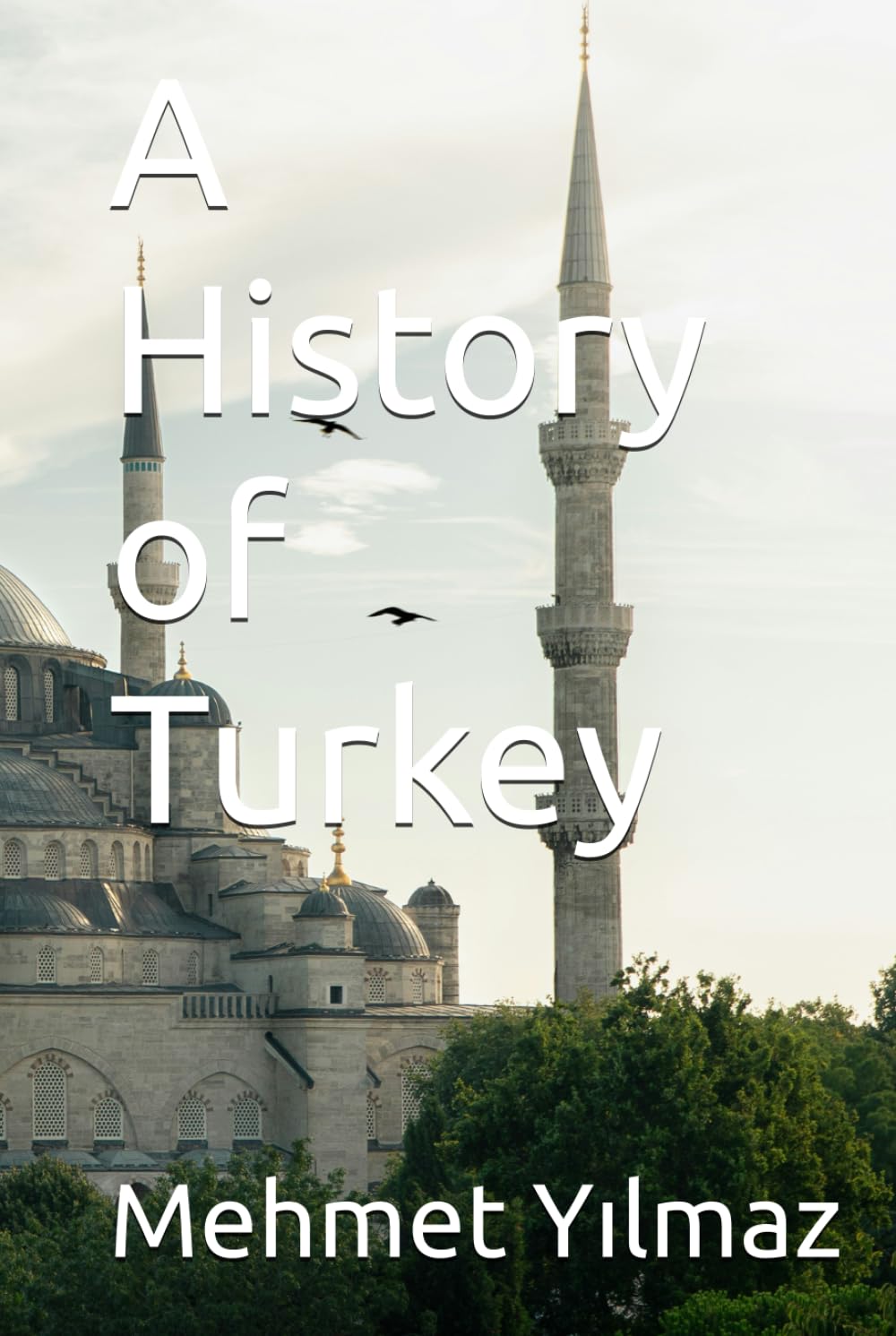
Reading “A History Of Turkey” by Mehmet Yilmaz was not looking at a faraway land through a Western lens, tainted by a dash of Christian paranoia. No, it felt as if I stood in the middle of Anatolia and saw life around me speed up. I am standing at the Hattusa Lion Gate. I enjoy living with the Hittites, the Phrygians, the Urartu. The Macedonians are invading, the folks around me start speaking Greek and continue to do so when the Romans take charge. I become part of Persia, a particle of Byzantium, before being absorbed by the invading Turks from Mongolia. The Ottoman centuries are fascinating all the way up to where the sick man of Europe and panicky political decisions in Constantinople create the right environment for one single spark to ignite World War One. The memories of traveling through Anatolia are getting a golden glance.
Do I understand Turkey and its politics? A little bit. But now I do understand a little more about what’s going on in today’s world. Where splintered liberal forces powering eras of free-thinking and tolerant societies are overwhelmed by waves of populistic politics and autocratic rule. Where fake news travels too fast and can lead to whole populations being uprooted or wiped out. I understand that great art can mesmerize people and quiet rebellious tongues. Not through paintings or prose that you have to look for. But through the beautiful basilicas, mosques and shrines that are right in your face and that are so impressive that you can hardly see these as Made by Man.
What mankind is really good at can be seen in Anatolia, too, where you’ll drown in Turkish history. Pergamon is a great example. An antique Greek town that still stood proud in the middle of the 19th century. But when German engineer Carl Humann visited the city that once surpassed Alexandria as conservatrice of knowledge, things changed. Now Pergamon is a field of ruins and to see its old glory you need to visit the Pergamonmuseum in Berlin, Germany. You can’t just blame the Germans. Or the Brits, or the Americans, whose museums carry more artifacts from the Middle East than you can find in the lands where they originated. The Ottoman Sultans, or at least their direct underlings, the ones who wrote legislation to protect their artifacts, were lax about export restrictions and defining ‘compensation’. In fact, the Ottomans never considered anything historic as theirs if it dated from prior to the Great Seljuk Sultan Suleiman ibn Qutulmish settling a new kingdom in Anatolia in 1081, which would eventually become the beating heart of Osman’s Empire. Mankind is good at destroying its own past, destroying what could save the future.
Destroying the reminders from the past, wiping out historic knowledge, that’s what we’re good at indeed. We never learn from the past. Not even that we never learn from the past. To me getting rid of solar and wind energy generators in the USA is just as evil as the Parthenon Marbles being stolen from Ottoman Greece by Thomas Brace, the 7th Earl of Elgin, and ending up in the British Museum in London, where tourists are gazing at the remnants of ancient history without any understanding of context. And thus, coal and oil keep poisoning our environment. And thus, we continue thinking in terms of Them and Us.